
Boat Chrome Polishing Tampa
Boat chrome polishing in Tampa that restores shine to rails, fittings, and metal hardware while removing oxidation and salt residue.
FUN FACTS!: The Eiffel Tower grows about 6 inches taller in the summer due to heat expansion.
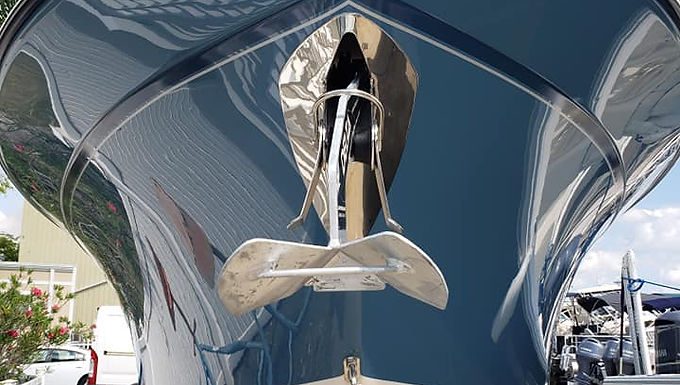
Boat Chrome Polishing Tampa
Every boat on Tampa Bay has metal hardware that's slowly losing its shine right now. Rails, cleats, ladders, trim pieces, stanchions — all of it sits exposed to saltwater spray, UV, and humid air every single day. A freshwater rinse after a trip helps, but it doesn't remove what's already bonded to the surface. If your chrome or stainless looks dull, spotted, or streaked, that's contamination that's been building up for weeks or months — and it's not coming off with water.
Chrome and stainless steel polishing is one of the most requested services we handle as part of our boat detailing service in Tampa. It's also one of the most neglected by boat owners until the damage becomes obvious.
What's Actually Happening to Your Metal Hardware
Most marine hardware is made from stainless steel or chrome-plated metal. Both are designed to resist corrosion, but neither is immune to the marine environment — especially in saltwater.
Stainless steel resists rust because it forms a thin chromium oxide layer on the surface called a passive film. That film is what keeps the metal from corroding. But chloride-rich seawater undermines that passive film over time. Salt spray lands on the metal, the water evaporates in Tampa's heat, and salt crystals remain behind. Those crystals are hygroscopic — they attract and hold moisture from the humidity, keeping a thin corrosive layer in constant contact with the metal even when the boat is sitting at the dock.
Over time, this cycle causes tea staining — those brown or rust-colored streaks that run down from fittings. It causes localized pitting, especially in crevices, weld points, and areas where dissimilar metals meet. And it dulls the reflective finish that makes hardware look clean and maintained.
Chrome-plated hardware is even more vulnerable. Chrome plating doesn't hold up as well as stainless in saltwater. Mild corrosion and oxidation can develop quickly, and if left untreated, surface tarnish turns into terminal pitting that permanently damages the finish. At that point, polishing can't bring it back — the hardware needs to be replaced.
That's why timing matters. The earlier you address dull or spotted metal, the more you can restore and the less it costs.
Why Tampa Bay Is Especially Hard on Boat Hardware
Tampa Bay boats deal with a combination of factors that accelerate metal deterioration faster than freshwater or even some other coastal environments.
Salt concentration in the bay means every trip coats your hardware in chloride-rich spray. Rails, bow fittings, tower structures, and anything forward-facing take the heaviest exposure. After docking near Davis Islands, South Tampa, or Apollo Beach, that salt sits on the metal — drying, reactivating with humidity, and drying again in a daily cycle that never lets up.
UV exposure compounds the problem. Sunlight heats the metal surface, which accelerates the chemical reaction between salt residue and the passive film. Hardware on boats docked in open slips near Hyde Park or along the Gandy corridor gets hit hardest because there's no shade to slow the process down.
Humidity keeps everything damp at the micro level. Even when the hardware looks dry, Tampa's air holds enough moisture to keep salt crystals active on the surface. This is why boats in this area develop tea staining and pitting faster than boats in drier coastal climates.
Oils from hands touching rails and hardware add another layer. Body oils trap salt and moisture against the metal, creating concentrated corrosion spots exactly where people grip the most — rail tops, ladder rungs, helm hardware.
What Rinsing Doesn't Fix
Most boat owners rinse their hardware with freshwater after each trip and assume that's enough. Rinsing removes loose salt from the surface, and it absolutely helps slow things down. But it doesn't remove mineral deposits that have already bonded to the metal. It doesn't dissolve oxidation that's forming underneath those deposits. And it doesn't restore the passive film that protects stainless from further corrosion.
Once water spots, salt residue, or oxidation have bonded to the metal surface, they need to be physically and chemically removed through proper polishing — not just rinsed off. Using the wrong products makes it worse. Many household or general-purpose metal cleaners contain harsh abrasives that scratch and haze stainless steel, creating micro-abrasion that actually promotes future corrosion by giving salt and moisture more places to penetrate.
Marine-grade metal polishing uses non-abrasive or appropriately graded compounds that remove contamination without damaging the surface underneath. Done correctly, the process doesn't just restore shine — it restores the protective passive layer that keeps the metal resistant to corrosion going forward.
Signs Your Hardware Needs Professional Polishing
You need this service if your chrome or stainless surfaces look dull or cloudy instead of reflective, water spots or white mineral deposits are visible on rails and fittings, brown or rust-colored tea staining is streaking down from hardware, metal surfaces feel rough instead of smooth to the touch, or you're seeing early pitting — small dark spots or pinhole marks in the metal.
If you're noticing any of these, the contamination has gone beyond what rinsing or wiping will remove. The longer it sits, the deeper it bonds — and the harder it becomes to restore without aggressive methods that risk thinning the chrome or damaging the passive film on stainless.
How Professional Chrome Polishing Works
The process starts with cleaning the metal surfaces to remove loose salt, grime, and surface-level contamination. Then bonded deposits — mineral buildup, oxidation, tea staining — are broken down using marine-safe cleaning compounds that target corrosion without attacking the underlying metal.
The polishing stage restores the reflective finish. Each surface is worked in small sections with the appropriate level of cut — starting as gently as possible and only increasing aggressiveness where the contamination requires it. The goal is always to remove the least amount of material necessary to restore the finish. Over-polishing stainless or chrome removes material that can't be replaced, just like over-correcting paint.
After polishing, a protective barrier is applied to the metal. This layer helps resist future salt deposits, slows oxidation, and buys time between polishing sessions. Without protection, freshly polished metal in Tampa's environment begins collecting contaminants again immediately.
Keeping Hardware Looking Better Between Services
You can extend the life of a professional polish with a few habits: rinse all metal hardware with freshwater after every trip, wipe down rails and fittings before salt dries on the surface, avoid letting water spots sit — they bond faster in Tampa's heat, and dry hardware after rinsing rather than letting it air-dry in humid conditions.
These steps won't replace professional polishing, but they'll slow the buildup and keep your hardware looking maintained between appointments.
If you'd like to explore additional services designed to restore and protect your vessel, you can visit our main detailing page.
Chrome and stainless hardware on a Tampa Bay boat is under constant assault from salt, sun, and humidity. Left unpolished, dull metal turns into pitted metal — and pitted metal turns into hardware that needs replacing. Professional polishing restores the finish, rebuilds the protective layer, and catches damage early before it becomes permanent.