
Interior Boat Cleaning Tampa
Interior boat cleaning in Tampa that removes dirt, spills, and buildup from seating, compartments, and surfaces to keep boat cabins clean and comfortable.
FUN FACTS!: Your fingernails grow faster in summer than in winter.
Interior Boat Cleaning Tampa
The inside of your boat is where everyone actually spends the day — sitting, eating, fishing, applying sunscreen, tracking sand across the deck, spilling drinks, and leaving behind the biological and chemical residue of a full afternoon on Tampa Bay. The exterior faces saltwater and UV. The interior faces people. And people, it turns out, are harder on marine surfaces than the environment is.
Every passenger who sits on a vinyl seat with freshly applied sunscreen transfers chemicals onto the upholstery that are actively destructive to the material. Every pair of shoes that steps aboard brings sand that grinds into textured flooring with every step. Every spill that isn't immediately cleaned settles into seams and crevices where it feeds bacteria and produces odors. Interior boat cleaning isn't about tidying up — it's about removing contamination that's degrading your seating, flooring, and cabin surfaces from the inside. As part of our full boat cleaning service in Tampa, interior cleaning addresses every surface passengers touch, sit on, or walk across.
Sunscreen Is Destroying Your Seats
This is the single biggest threat to marine vinyl interiors, and most boat owners have no idea it's happening.
Oxybenzone, another common sunscreen ingredient, creates similar staining and can haze acrylic windshields and clear enclosures. Spray sunscreens are the worst offenders because overspray coats every surface within reach — seats, dash panels, grab rails, non-skid flooring, and any clear plastic or glass nearby.
The damage compounds with every trip. A family applies sunscreen before boarding. They sit on the vinyl. The chemicals transfer to the seat surface and begin reacting. After docking, nobody wipes the seats down. Tampa's heat bakes the residue into the material overnight. The next weekend, fresh sunscreen layers on top of partially reacted residue. By mid-season, the seats have developed staining that basic cleaning can't remove because the discoloration has penetrated below the surface.
Professional interior cleaning removes sunscreen residue using marine-grade vinyl cleaners that break down the chemical deposits without stripping the vinyl's remaining plasticizers — the compounds that keep vinyl soft and flexible. After cleaning, UV protectant is applied to rebuild the barrier that sunscreen chemicals have been degrading.
The Bacterial Pinking Problem
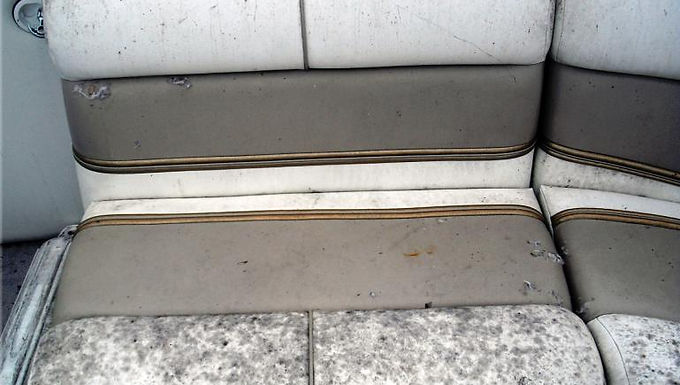
If you've ever noticed pink or light red blotches appearing on white or light-colored vinyl boat seats and wondered what caused them, the answer is bacteria.
A specific strain of bacteria colonizes vinyl surfaces when four conditions are present: oxygen, fresh water, warmth, and a food source. The food source is human skin cells and PABA-containing sunscreen residue left on the seating surface. In Tampa's climate — where warmth and moisture are constant and boats sit covered between trips in humid air — three of the four conditions are always present. The only variable is whether enough organic material was left on the seats to feed a colony.
When these bacteria consume the available food and begin dying, they secrete a pink dye as a metabolic byproduct. That dye is soluble in the plasticizers within vinyl-coated fabric, which means it wicks into the material from the inside. By the time you see the pink staining on the surface, the bacteria have already completed their life cycle and the dye has migrated through the vinyl. Surface wiping doesn't remove it because the stain isn't on the surface — it's inside the material.
Regular interior cleaning after every trip eliminates the food source. Clean seats with no residual skin oils or sunscreen residue provide nothing for bacteria to feed on. The pinking never starts because the conditions for colonization aren't met. This is prevention that costs minutes of cleaning versus the specialized chemical treatment required to remove established pink staining — which sometimes cannot be fully reversed.
Marine Carpet Holds Everything You Can't See
Boat carpet — especially in cockpit areas, cabins, and under helm stations — functions as a contamination reservoir. Sand settles between the fibers and works deeper with every footstep. Spilled drinks seep through the carpet into the backing and padding underneath. Saltwater from wet feet and dripping gear soaks into material that wasn't designed to dry quickly in an enclosed marine environment.
In Tampa's humidity, a boat carpet that gets wet during a trip and is then covered and sealed under a boat cover may not dry for days. The carpet surface might feel dry, but the backing retains moisture in a warm, dark space — exactly the conditions mold requires. Once mold establishes in carpet backing, it produces odor and spores that release into the cabin every time passengers step on it or air moves across it.
Professional interior cleaning uses extraction methods that pull contamination and moisture from deep within the carpet structure — not just the surface fibers. The goal is removing the sand, salt, and organic material that's settled below the visible surface while extracting enough moisture that the material dries before biological growth has time to establish.
Compartments, Lockers, and Hidden Storage
Every boat interior has compartments that accumulate debris between cleanings — rod lockers, tackle storage, under-seat compartments, cooler spaces, cup holders, dash pockets. These areas collect crumbs, bait residue, spilled liquids, and organic material that decomposes in Tampa's heat between trips.
Closed compartments in a warm boat become incubators. The combination of organic material and trapped humidity produces the "boat smell" that owners recognize — a musty, slightly sour odor that isn't coming from the visible surfaces. It's coming from what's been accumulating in spaces nobody opens between trips.
Interior cleaning opens every compartment, removes accumulated debris, cleans the interior surfaces, and addresses the moisture and organic material that's been building. This is the work that eliminates odors at their source rather than covering them with fragrance.
Vinyl Conditioning Is Maintenance, Not Optional
Marine vinyl in Tampa faces a paradox: it's simultaneously exposed to excessive moisture from the marine environment and excessive drying from UV radiation. Saltwater and humidity keep the surface wet, while direct sun bakes the material and evaporates the plasticizers that maintain flexibility.
As plasticizers leave the vinyl, the material stiffens. Stiff vinyl cracks under the flexing that happens when passengers sit down, shift weight, and stand up. Once cracks develop, water intrusion into the seat foam accelerates, mold establishes inside the cushion, and the seat deteriorates from the inside out.
Cleaning vinyl without conditioning it is an incomplete service. The cleaning removes contaminants. The conditioning replaces the flexibility-maintaining compounds that UV and environmental exposure have depleted. Both steps together are what keeps vinyl seating functional across multiple seasons in Tampa's conditions.
If you'd like to explore additional services designed to maintain the appearance of your vessel, you can visit our main detailing page.
The inside of your boat takes more abuse from passengers in one afternoon than the outside takes from the bay in a week. Sunscreen chemicals attacking vinyl, bacteria colonizing seats, sand grinding into carpet, moisture settling into every compartment. Interior cleaning resets all of it — and in Tampa, where the boat never gets a break from heat and humidity, that reset is what keeps the cabin livable instead of declining between trips.