
Marine Upholstery Cleaning Tampa
Marine upholstery cleaning in Tampa that removes stains, salt residue, and grime from boat seats while restoring vinyl and fabric surfaces.
FUN FACTS!: Some plants can communicate with each other through underground fungal networks.
Marine Upholstery Cleaning Tampa
Sunscreen is destroying your boat seats, and it's doing it while you think you're being responsible.
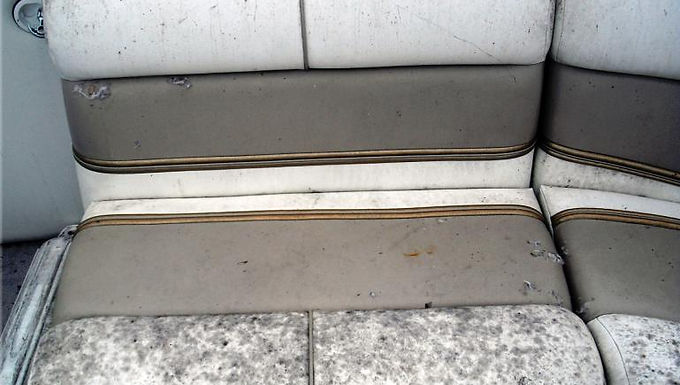
Every tube of SPF 50 your passengers apply contains chemical UV filters — avobenzone, oxybenzone, octocrylene — that were engineered to absorb ultraviolet radiation on skin. When those chemicals transfer to marine vinyl, they don't just sit on the surface. They react with the material itself. Avobenzone in particular strips the protective topcoat from marine-grade vinyl and chemically bonds with the material underneath, leaving orange and yellow stains that resist every wipe-down you throw at them. The aerosol sprays are worse — overspray coats areas nobody sat on, and the fine mist settles into stitching seams where it's impossible to wipe away.
Your passengers aren't doing anything wrong. They're protecting their skin on a Tampa Bay afternoon where the UV index regularly exceeds 10. But the residue they leave behind is the single largest source of upholstery damage on recreational boats, and it accumulates with every trip. As part of our boat detailing service in Tampa, marine upholstery cleaning removes the chemical buildup that routine wiping can't reach and restores the protective layer that sunscreen has been slowly dismantling.
What Marine Vinyl Actually Is — and Why That Matters
Most boat owners think of their seats as a waterproof fabric. That's not quite right. Marine vinyl is a layered engineered material — a PVC skin bonded to a woven backing, stretched over closed-cell foam cushioning. The PVC surface is treated during manufacturing with UV inhibitors to resist sun fade, antimicrobial agents to resist mold and bacteria, and plasticizers that keep the material soft and flexible rather than rigid and brittle.
Every one of those treatments is a consumable. UV inhibitors break down with cumulative sun exposure. Antimicrobial protection degrades when exposed to cleaning chemicals that weren't designed for marine vinyl. Plasticizers evaporate slowly in heat — and Tampa's summer surface temperatures on a sun-exposed boat seat can exceed 150°F, which accelerates plasticizer loss significantly.
When a boat owner scrubs their seats with bleach, ammonia-based household cleaners, or abrasive pads, they're removing contaminants but they're also stripping the factory-applied protective layer that makes the vinyl resistant to future contamination. The seats look clean for a day. Then they stain faster than before, absorb more deeply than before, and begin cracking sooner than before — because the chemical protection that was preventing all of that has been scrubbed away by the cleaning method itself.
Professional marine upholstery cleaning uses pH-balanced products formulated specifically for PVC vinyl. These cleaners dissolve oils, break down sunscreen residue, and lift organic contamination without attacking the plasticizers, UV inhibitors, or antimicrobial treatments built into the material. The distinction isn't subtle — it's the difference between cleaning the seats and degrading them.
The Pinking Problem Nobody Talks About
There's a stain that appears on boat vinyl that looks like a pink or reddish-purple blotch, and no amount of scrubbing removes it. Most boat owners assume it's mold, dye transfer from a cover, or some kind of chemical spill. It's none of those things.
The stain is caused by a bacterium called Streptoverticillium reticulum — an organism that lives in freshwater and enters vinyl cushions through stitching holes and seam gaps. Once inside, the bacteria colonize the space between the foam core and the underside of the vinyl, feeding on the plasticizers that keep the PVC flexible. When the colony runs out of food and begins dying off, the bacteria secrete a red pigment as a metabolic byproduct. That pigment wicks upward through the vinyl material and appears on the surface as the blotchy pink stain that has frustrated boat owners across the industry for decades.
The stain is permanent because it's not sitting on the vinyl — it has migrated through it from the inside. Estimates suggest it affects somewhere between 10 and 20 percent of boats in North America. Tampa's climate is an incubator for it: the bacteria need warmth, moisture, oxygen, and a food source. A boat that gets rained on, hosed down with freshwater, and then covered while the interior is still damp provides all four. Add sunscreen residue containing PABA — which the bacteria also feed on — and the conditions are optimized.
Prevention is the only reliable defense. Thorough cleaning and complete drying of all vinyl surfaces after every trip denies the bacteria the moisture and food supply they need to establish a colony. Professional upholstery cleaning is more effective at this than surface wiping because the cleaning process reaches contamination trapped in seams, textured grain, and the stitching channels where bacteria enter.
Tampa Heat and the Absorption Cycle
Vinyl behaves differently at 95°F than it does at 70°F, and that difference determines how deeply contaminants penetrate your seats.
PVC is a thermoplastic. When heated, its molecular structure loosens. The microscopic pores in the vinyl's surface expand, and the material becomes slightly more permeable. In Tampa's summer, boat seats parked in direct sun reach temperatures where the vinyl surface is actively absorbing whatever is sitting on it — body oils, sunscreen chemicals, salt residue, drink spills, fish residue. Contaminants that would sit on the surface of cool vinyl sink into hot vinyl.
Once the seat cools overnight, the pores contract around whatever settled into them. The contamination is now below the surface, locked into the material. A wipe-down the next morning removes what's sitting on top but can't reach what absorbed during the heat of the previous day. Each trip layers new contamination into the vinyl at a depth that surface cleaning can't access.
This is why boat seats in Tampa develop that grayish discoloration that won't wipe clean — it's not surface dirt. It's weeks or months of absorbed contamination embedded into the PVC structure itself. Extracting it requires cleaners with the surfactant chemistry to penetrate below the surface and emulsify the embedded oils and residue, followed by agitation that draws the contamination out of the pore structure rather than pushing it deeper.
What Proper Cleaning Restores
After extracting embedded contamination, the vinyl surface needs its protective layer replenished. UV protectant application replaces the inhibitors that sun exposure and cleaning have depleted. This step isn't cosmetic polish — it's functional restoration of the chemical barrier that prevents UV degradation of the plasticizers underneath. Without periodic reapplication, the vinyl continues losing flexibility until it stiffens and cracks.
The difference between maintained vinyl and neglected vinyl isn't just appearance. It's structural integrity. Vinyl that retains its plasticizers and UV protection stays flexible, resists cracking, and maintains its tensile strength at seams and stress points. Vinyl that's been chemically stripped by improper cleaning and baked by Tampa sun without protectant replacement becomes brittle. Once it cracks, the foam underneath absorbs water, the bacteria move in, and the entire cushion needs replacement — a cost that dwarfs years of professional cleaning.
If you'd like to explore additional services designed to keep your vessel clean and well maintained, you can visit our main detailing page.
Your boat seats are under chemical attack from the people who use them and the sun they sit under. Marine upholstery cleaning removes what your passengers leave behind, restores what Tampa's heat strips away, and prevents the biological contamination that turns a cleaning problem into a replacement bill.