
Vinyl Seat Cleaning Tampa
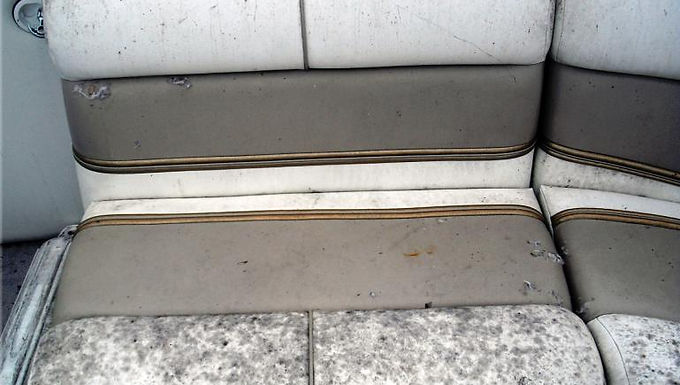
Vinyl seat cleaning in Tampa that removes sunscreen stains, salt residue, and grime from boat seating while restoring the clean look of marine vinyl.
FUN FACTS!: The average person sheds about 40 pounds of skin in their lifetime.
Vinyl Seat Cleaning Tampa
Marine vinyl is not a single material. It's a system — a PVC base layer blended with chemical plasticizers that make it flexible, a polyester mesh backing for structural strength, UV stabilizers to resist sun degradation, antimicrobial additives to resist mold, and a topcoat finish that seals the surface against stains and moisture. When that system is intact, marine vinyl handles sun, salt, and passengers without issue for years.
When any part of that system breaks down, the deterioration accelerates through every other layer. And in Tampa Bay's UV and heat environment, the breakdown mechanism is specific and well-understood: plasticizer migration. Everything that goes wrong with boat vinyl — stiffening, cracking, permanent staining, discoloration — traces back to the plasticizers leaving the material faster than the PVC was designed to lose them. Cleaning vinyl seats isn't cosmetic maintenance. It's removing the surface contaminants that actively pull those plasticizers out of your vinyl and accelerate the timeline from "seats look great" to "seats need replacing." This is foundational work within our boat detailing service in Tampa — protecting the most expensive replaceable component on most recreational boats.
What Plasticizers Do and Why They Leave
PVC in its natural state is rigid. The clear pipes and hard fittings in your plumbing are PVC without plasticizers. The flexible, cushioned vinyl on your boat seats is the same polymer with plasticizer compounds added during manufacturing — typically phthalate esters that distribute throughout the PVC matrix and keep the molecular chains separated enough to remain soft and pliable.
Here's the critical engineering detail: those plasticizers are not chemically bonded to the PVC polymer chains. They're held in place by physical intermolecular forces, not covalent bonds. This means they can migrate — slowly working their way through the material and eventually escaping from the surface through evaporation, contact transfer, or chemical extraction.
This migration is happening to every piece of marine vinyl on every boat in every marina in Tampa Bay. It's a fundamental property of the material. The question isn't whether it occurs — it's how fast. And the speed depends directly on the environmental conditions the vinyl is exposed to.
Heat is the primary accelerant. Research on PVC plasticizer behavior demonstrates that migration rate roughly doubles for every 10°C increase in temperature. A boat seat in direct Tampa sun reaches surface temperatures that can exceed 60°C on a July afternoon. At that temperature, plasticizers are migrating at several times the rate they would in a climate with moderate summers. Every hot afternoon on the water, every day the boat sits uncovered at the dock, every hour of direct sun exposure is drawing plasticizers out of the vinyl faster than the manufacturer's durability testing assumed.
UV radiation attacks the PVC polymer chains directly through photodegradation — breaking carbon-chlorine bonds in the polymer backbone, creating structural damage that increases the spaces between chains and makes it even easier for plasticizers to escape. UV and heat work together: the UV weakens the polymer structure while the heat drives the plasticizers through the widening gaps.
Once the plasticizers leave, they don't come back. The process is permanent. No conditioner, restorer, or protectant can replace lost plasticizers within the PVC matrix. Products marketed as vinyl restorers can temporarily soften the surface and improve appearance, but they're coating the outside of the material — they cannot replenish what was lost from the inside. Prevention is the only strategy that works, and prevention means slowing the migration rate by controlling the conditions at the vinyl surface.
How Surface Contaminants Accelerate the Process
This is where cleaning connects directly to preservation.
Sunscreen is the most destructive contaminant that lands on marine vinyl in Tampa. The oils in sunscreen — both the active UV-blocking ingredients and the carrier oils that make the product spreadable — are lipophilic compounds. They have a chemical affinity for the phthalate plasticizers in the vinyl. When sunscreen residue sits on the vinyl surface for hours in the sun, it doesn't just stain the topcoat — it begins extracting plasticizers from the vinyl through the same lipophilic mechanism that makes oily foods pull plasticizers from PVC packaging. Every passenger who applies sunscreen and sits on your vinyl seats is placing a plasticizer-extracting compound directly on the surface and then pressing it into the material with body weight and heat.
Body oils operate through the same mechanism. Sweat deposits salt on the surface. Fish residue and bait oils are lipophilic extractors. Even the salt spray from Tampa Bay, when it deposits and dries, creates a moisture-trapping film that holds humidity against the vinyl surface and facilitates water-mediated plasticizer migration.
The bacteria angle compounds the problem. Fungi and bacteria that colonize marine vinyl surfaces actually feed on phthalate plasticizers. They metabolize the compounds that are keeping the vinyl flexible, accelerating the migration from the inside while UV and heat accelerate it from the outside. The notorious pink staining that plagues white marine vinyl in Florida is caused by the bacterium Streptoverticillium reticulum, which produces a red pigment called prodigiosin as a metabolic byproduct — a stain that diffuses into the vinyl and cannot be cleaned from the surface because it's embedded within the material itself.
Every contaminant on the vinyl surface either extracts plasticizers, feeds organisms that consume them, or traps moisture and heat against the material. Removing those contaminants through proper cleaning directly slows the degradation process.
What Proper Vinyl Cleaning Protects
The topcoat — the engineered finish layer applied over the PVC during manufacturing — is the first line of defense against everything described above. It seals the microscopic pores in the vinyl surface, blocks UV penetration into the PVC layer, and creates a barrier between contaminants and the plasticizer-rich material beneath.
Harsh household cleaners, bleach solutions, and abrasive scrubbing strip this topcoat. Once it's compromised, contaminants access the PVC directly, UV reaches the polymer chains without filtration, and the timeline accelerates dramatically. A boat owner who scrubs sunscreen stains with an abrasive cleaner may remove the visible stain but destroys the protective layer that was preventing the next stain from reaching the vinyl itself.
Proper vinyl seat cleaning uses marine-specific products formulated to dissolve oils and organic residue without attacking the topcoat. The cleaning lifts contaminants from the surface, the surface is wiped clean, and the topcoat remains intact. Following cleaning, a UV-protective vinyl treatment seals the surface and provides additional resistance against the next round of sun, sunscreen, and salt exposure.
If you'd like to explore additional services designed to keep your vessel clean and protected, you can visit our main detailing page.
Marine vinyl is losing its flexibility right now, at a rate determined by what's sitting on its surface. Sunscreen, body oils, salt, and biological growth are pulling plasticizers out of your seats while Tampa's sun and heat drive the process from above. Cleaning removes the extractors. Protection slows the migration. Neglect makes the timeline irreversible.